SARAH BIERMAN


Mixed reality mobile platform that helps users plan and play human vs zombies.
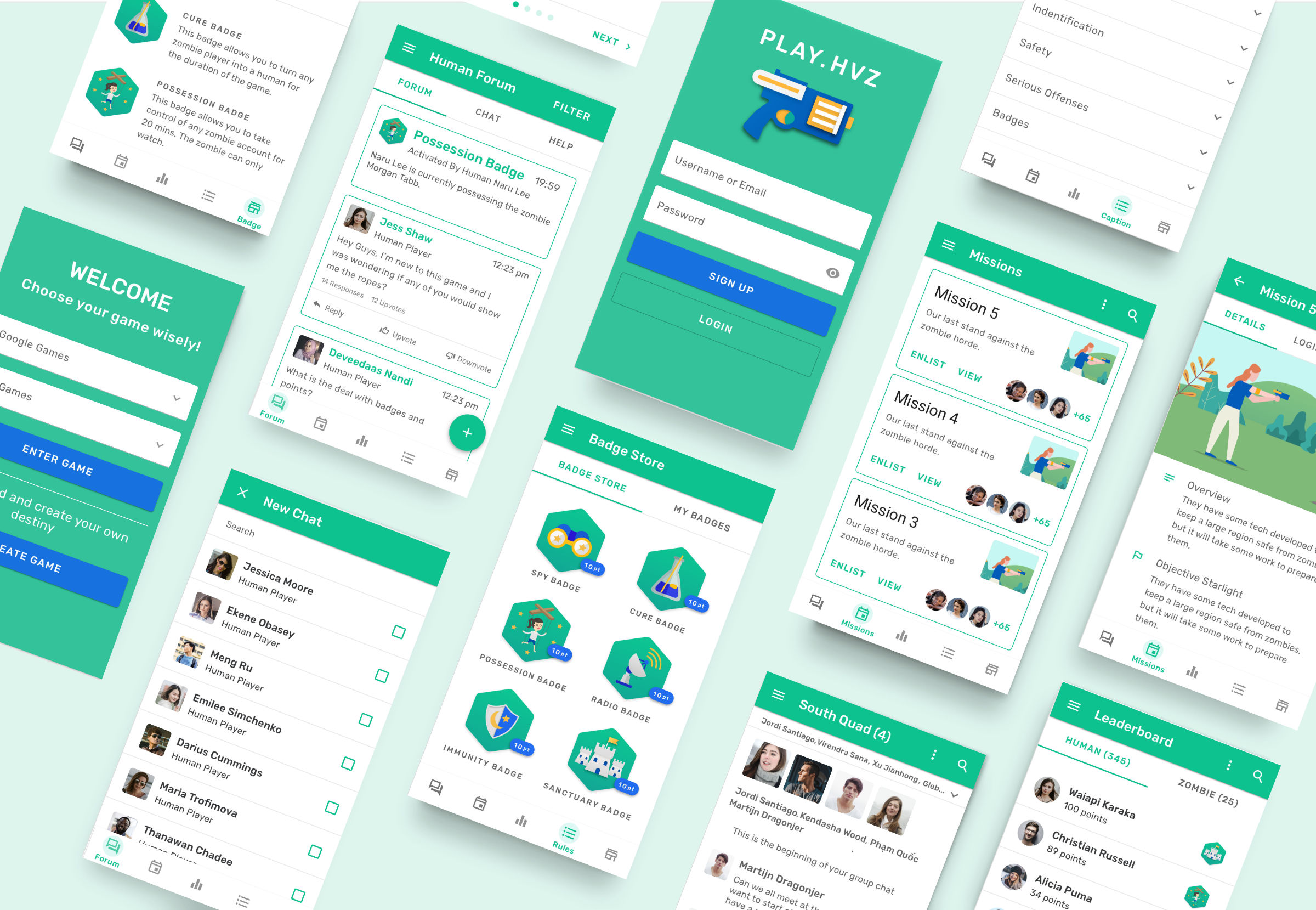
“Sarah has gone above and beyond my expectations and I am so impressed by how much effort she has put into this project. She has transformed my vision into a reality. She is an exceptional problem solver, UX evangelist and my favorite creative genius. "
Chewy Shaw, Founder
I was the sole designer for this project. I built the app from the ground up using user insights and client feedback to guide me. I was responsible for conducting user interviews and synthesizing that research.
I created the wireframes and map out the information architecture. I designed the style guide, created the illustrations and prototyped the ui interactions.
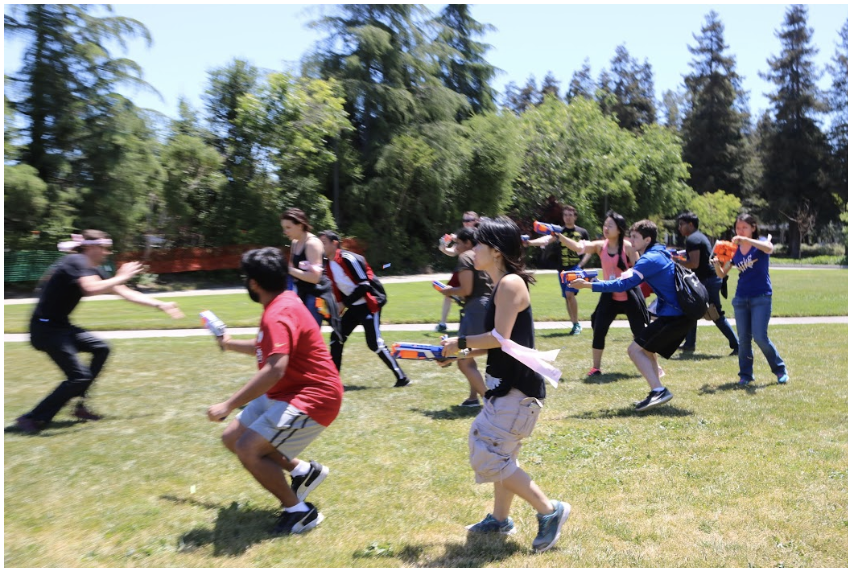
Google runs a week-long game of Humans vs Zombies, a survival game of tag, where players begin as humans that attempt to survive a zombie invasion, every summer. This game is typically run manually, with posters, flyers, and spreadsheets.
Bogged down by repetitive tasks, the HVZ team developed a website to automate some of the game interactions, with the intention of scaling the game. However, they ran into serious usability issues that diminished the usefulness of the website.
Improve the usability and aesthetics of the previous site by centralizing game interactions such as player communication event page with rsvp functionality, points, power ups, rules, and instant updates about the game.
PLAY HVZ has a patent pending at Google. The team has entered into the early stages of the development process. I'm staying on as a UX consultant to guide the engineering team forward. Below is the internal recruitment video that helped get the development process going.
I began my exploration phase by conducting 5 remote user interviews with experienced players. Having never played HVZ, I used this opportunity to understand how HVZ is played, what motivates players, and some of the problems that come up.
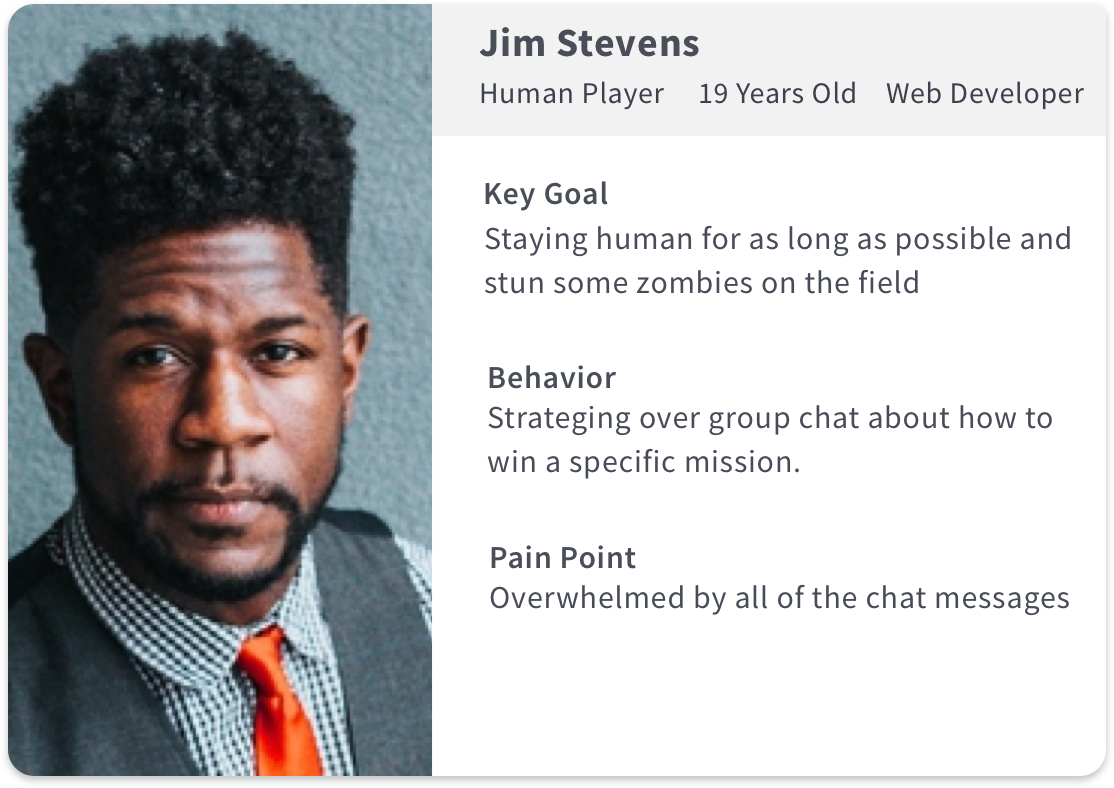
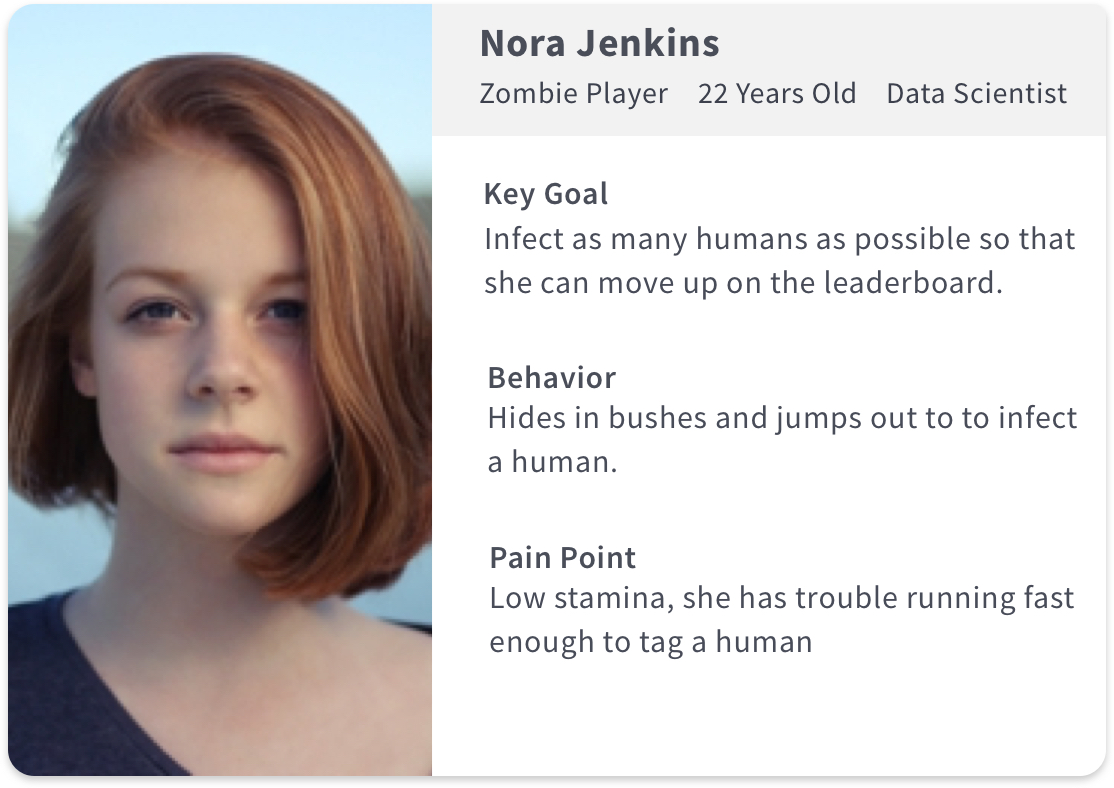
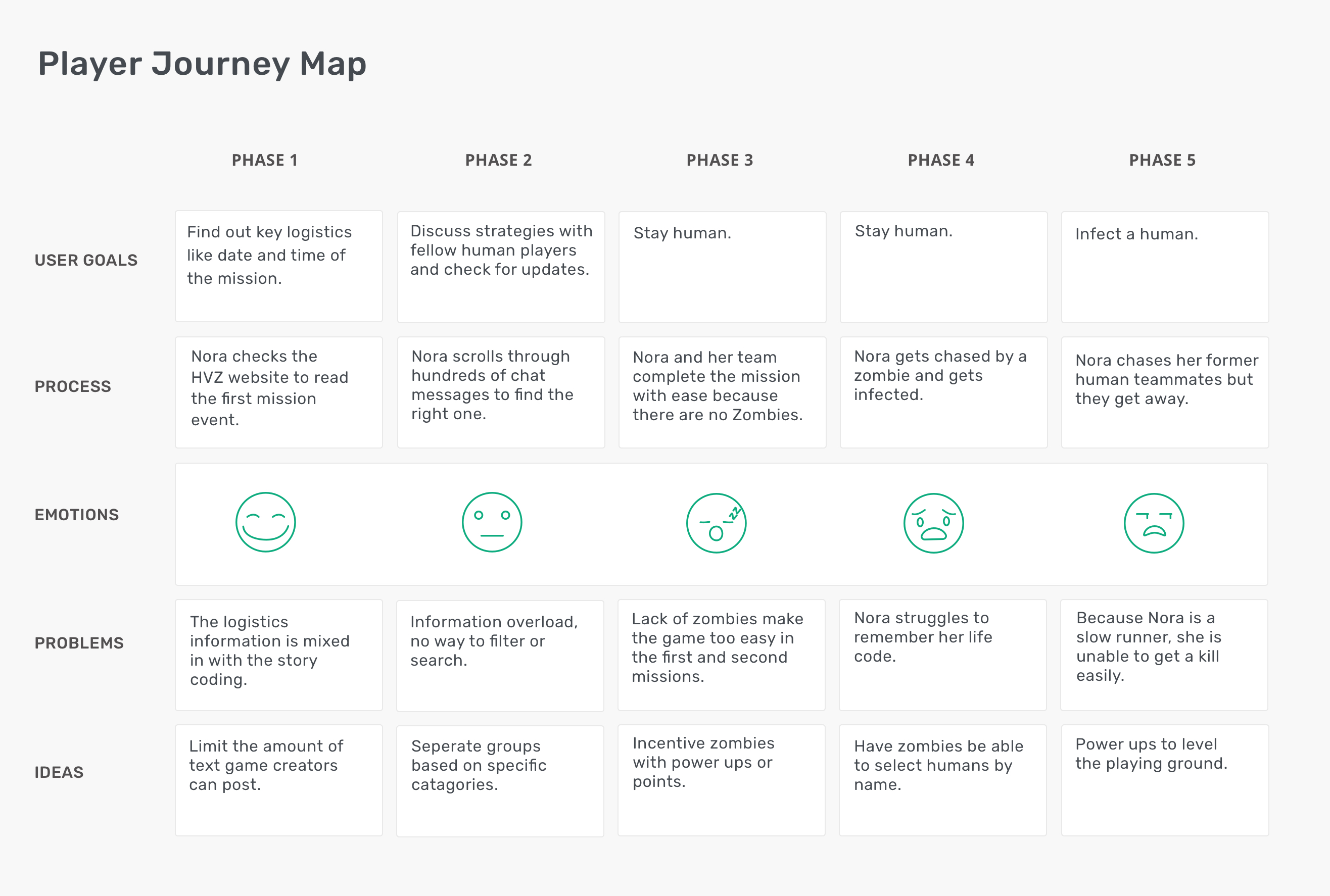
I created two personas and journey map to represent my research findings and illustrate a typical player’s journey through the mixed reality of human vs zombies.
“As a human. I really enjoy the paranoia of having to look over your shoulder and see where the zombies are coming and like and pretend like it is a real zombie apocalypse."
Olivia, User Participant
It's kind of this giant group of people from like all across Google but that gets together and plays and like I've met a lot of people that I probably wouldn't have talked to and I feel like your friendships are better because you've been through war, you know?
Kim, User Participant
Lost Teammates: Users often play with unfamiliar colleagues in large groups. Given the fast paced nature of the game, it's easy to get separated from teammates. This pain point is compounded when neither party has each others' contact info.
Running Slowly: Running fast is a key skill a player needs in HVZ. If you can't run fast then meeting the zombie objective of infecting a human becomes difficult.
Cognitive Overload: The original website has a global chat for each side. It is the main way for all players to communicate. The lack of a filter function and the inability to prioritize messages forces users to painstakingly scroll through hundreds of messages.
Unmotivated Zombies: Due to the low numbers of zombies at the start of the game, humans outnumber zombies by huge margins. This imbalance results in a low zombie turnout, and disincentives zombies from trying hard, in early missions. Since humans play the game to feel fear, this makes the game less fun.
Missed Announcements: Announcements are a critical part of the game. Players need to know when the game ends, if there is a rule change, or a location change. Since the game is spread over a large area, players often miss out on these announcements.
Cognitive Overload: The missions on the original website is text heavy. Missions are a combination of story coding, objectives, and logistical information. Since these components are woven together, it's difficult to find logistical information like when or where. Players scan through the mission instead of reading it, leaving them unprepared.
I went pattern hunting on Dribble, Pinterest and Material. After gathering my inspiration I sat down with the team lead and we sketched solutions. Communicating visually helped us get on the same page.
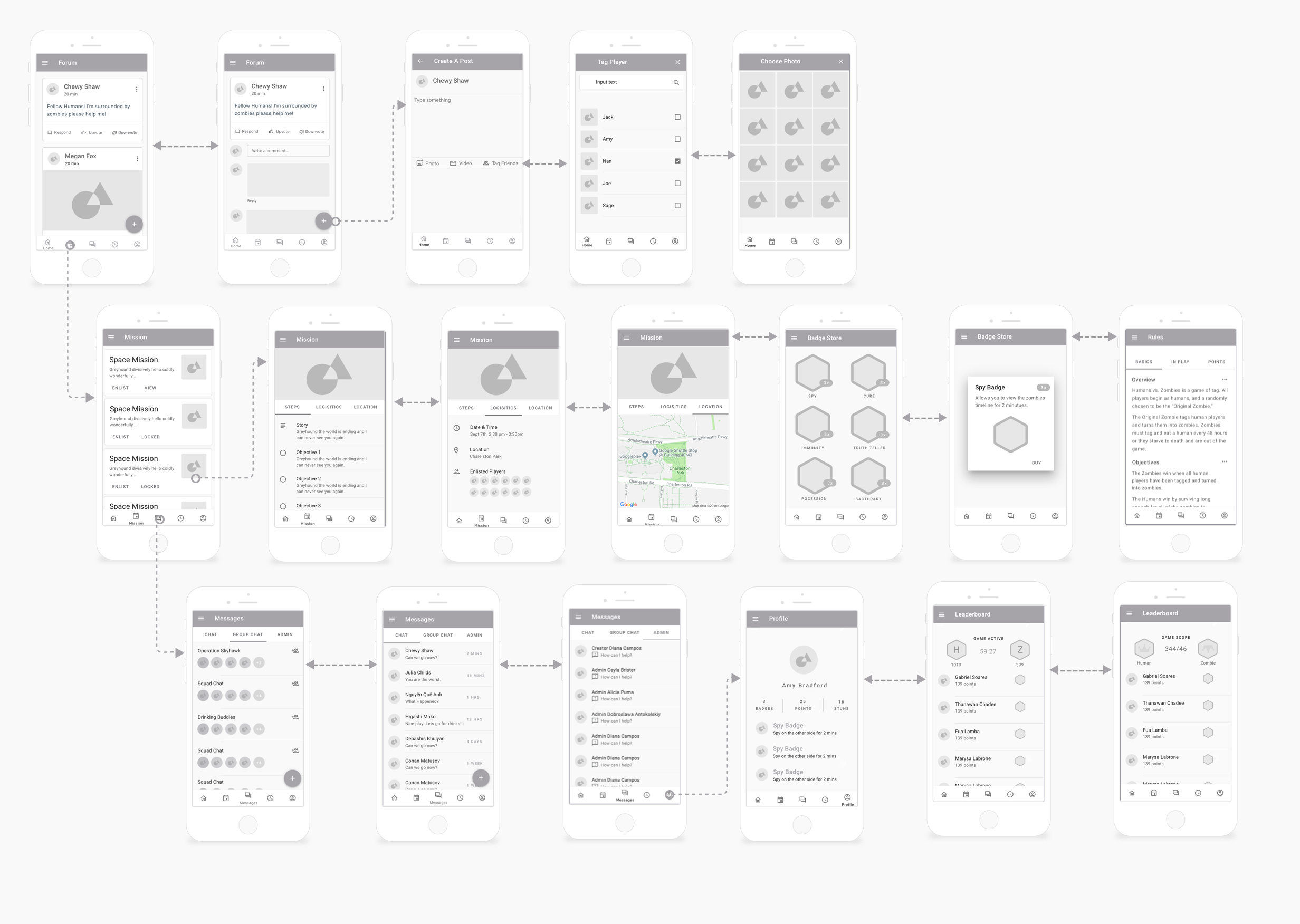
I decided to use a wire-flow to communicate the information architecture instead of a task flow because I found that the wire-flow was a better tool to represent the information architecture.
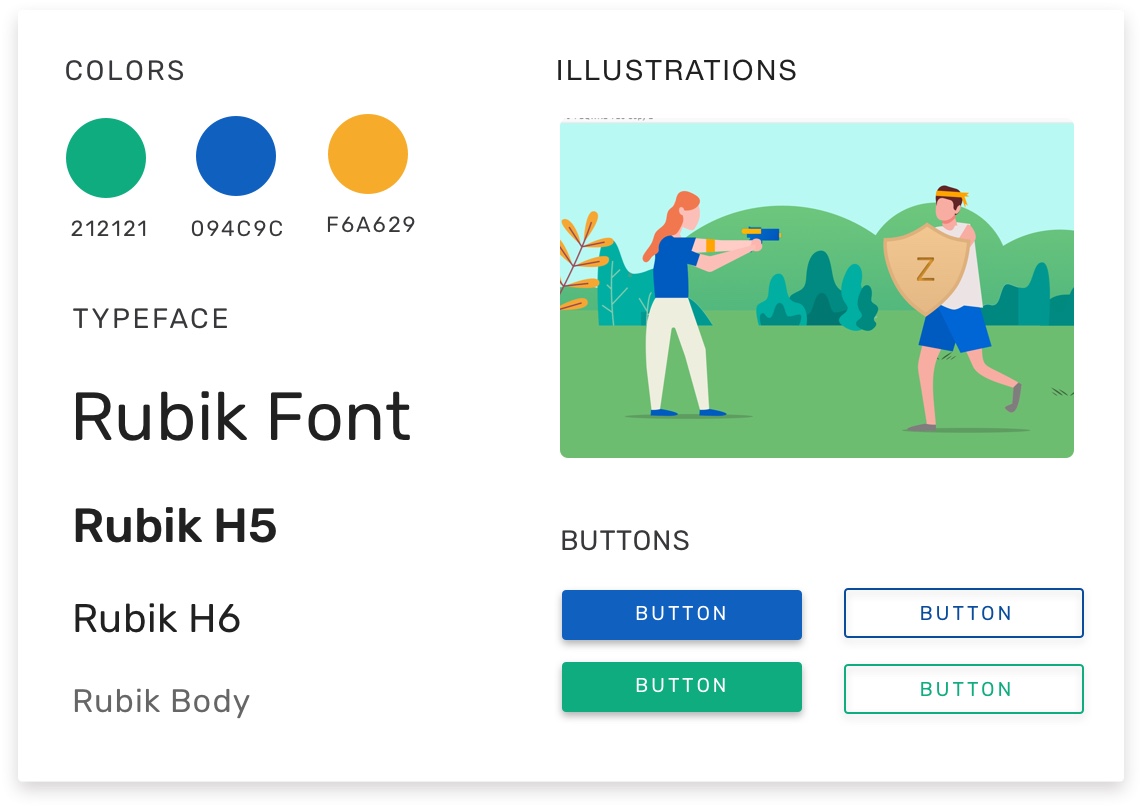
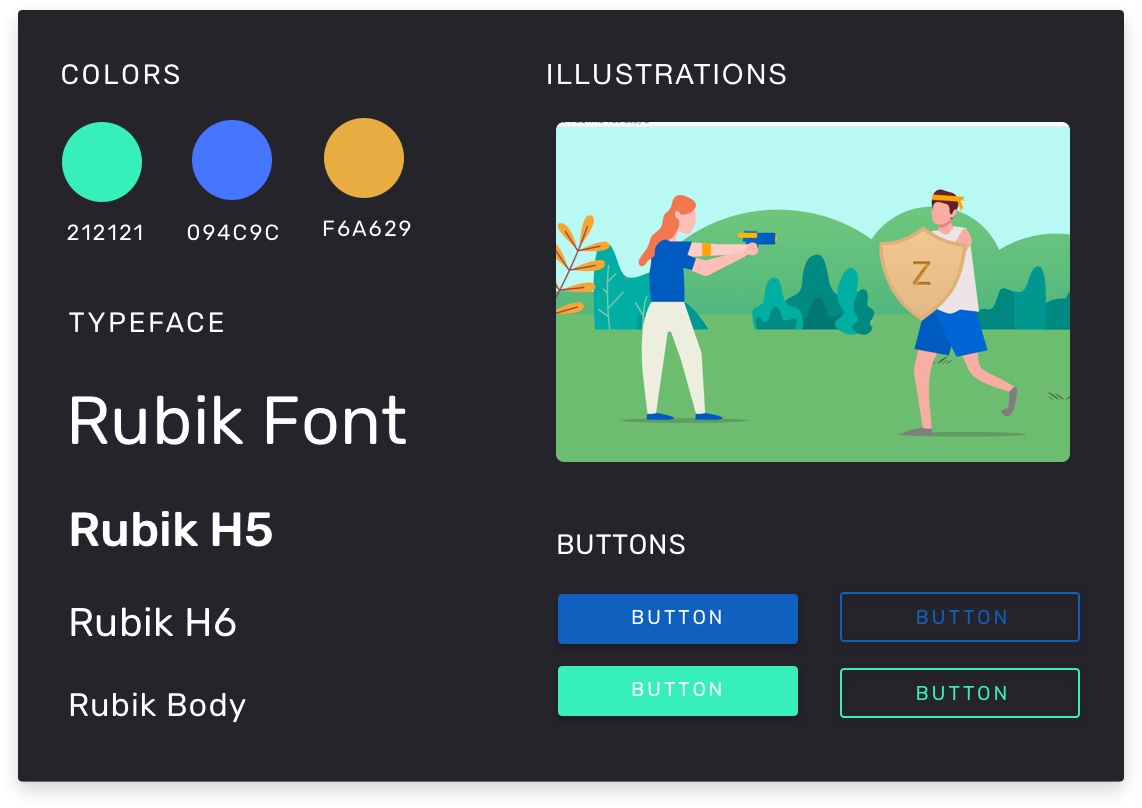
I was inspired by the bold, toy-like colors of the nerf gun and the cool colors of the parkland environment human vs zombies is often played in. I followed Material Design guidelines religiously to implement the UI. I designed all of the illustrations to increase delight and to add a unique flare. The player side of the app is separated into two sections, a zombie side and a human side. When a human is infected in the game and they are "turned into a zombie" the app transforms from a light ui to a dark ui to reflect the infection.
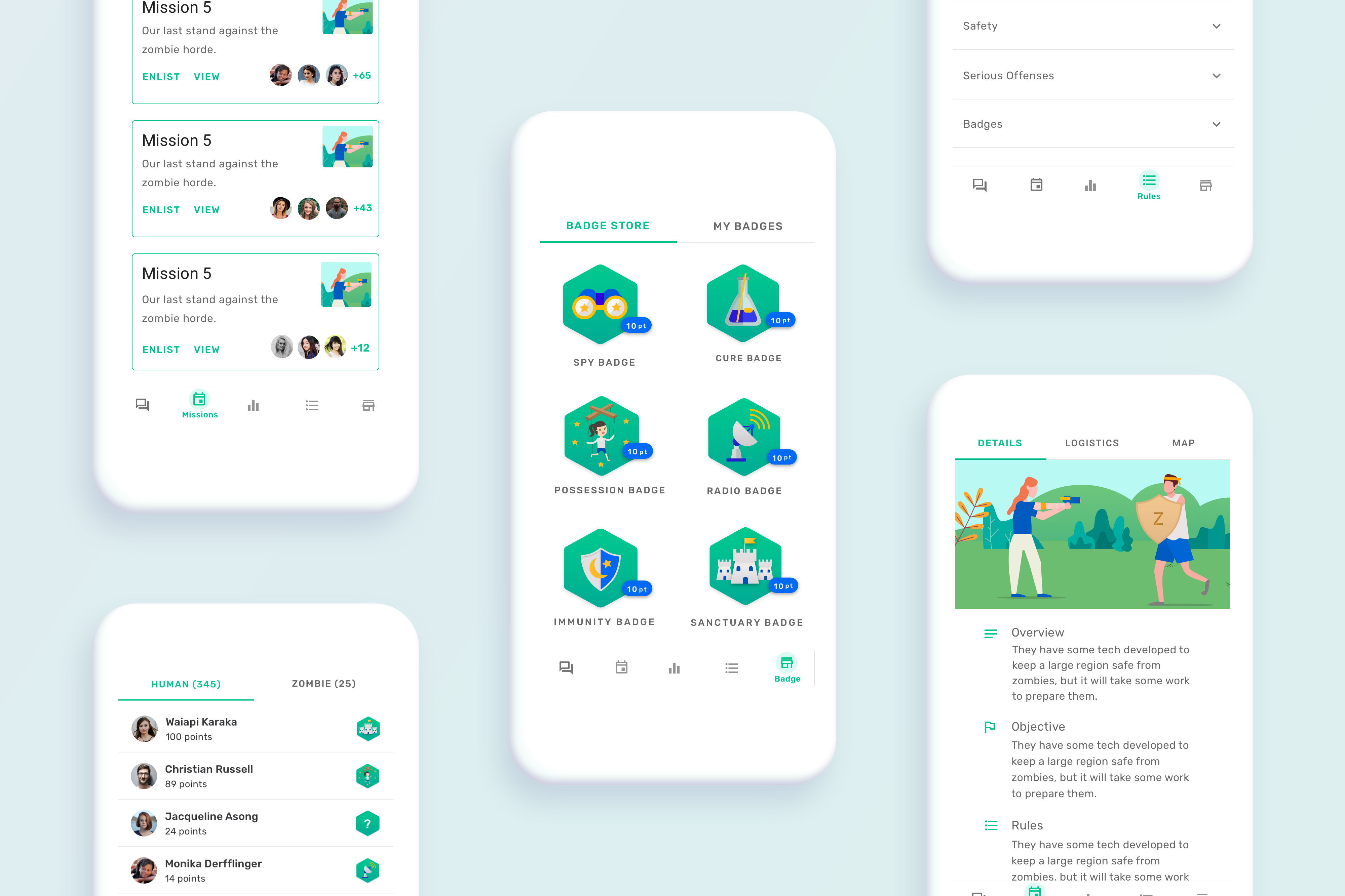
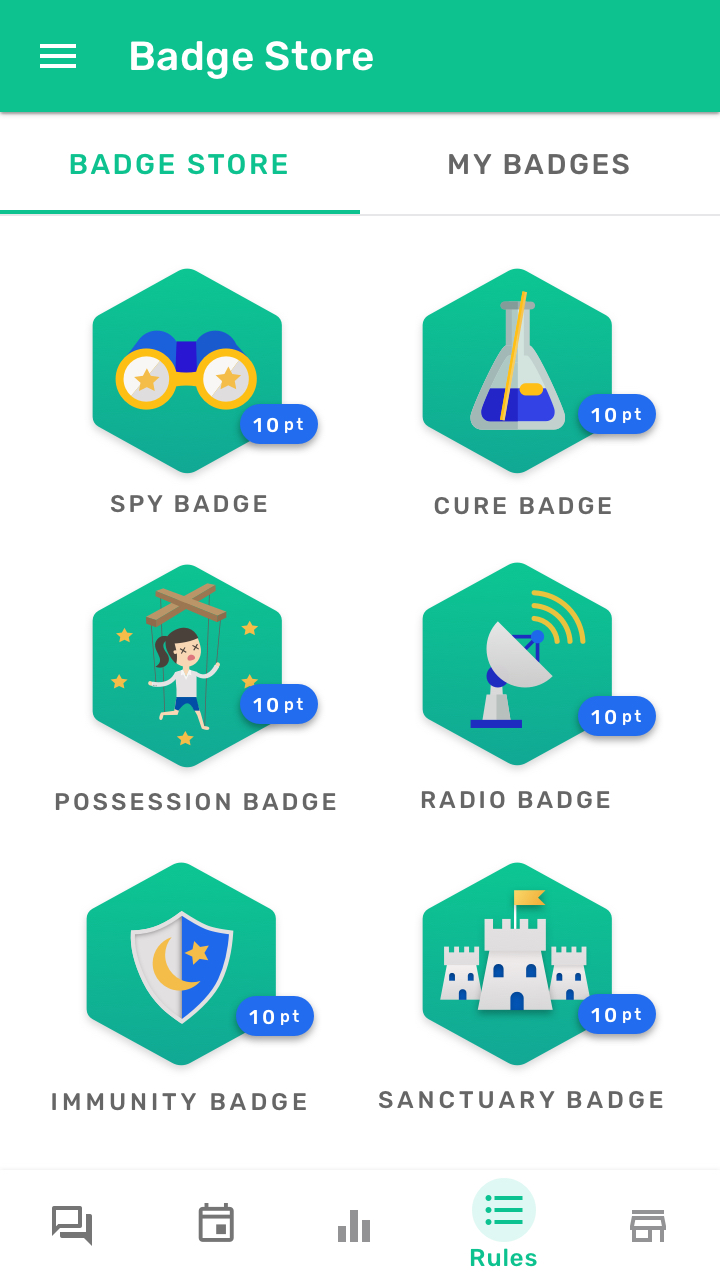
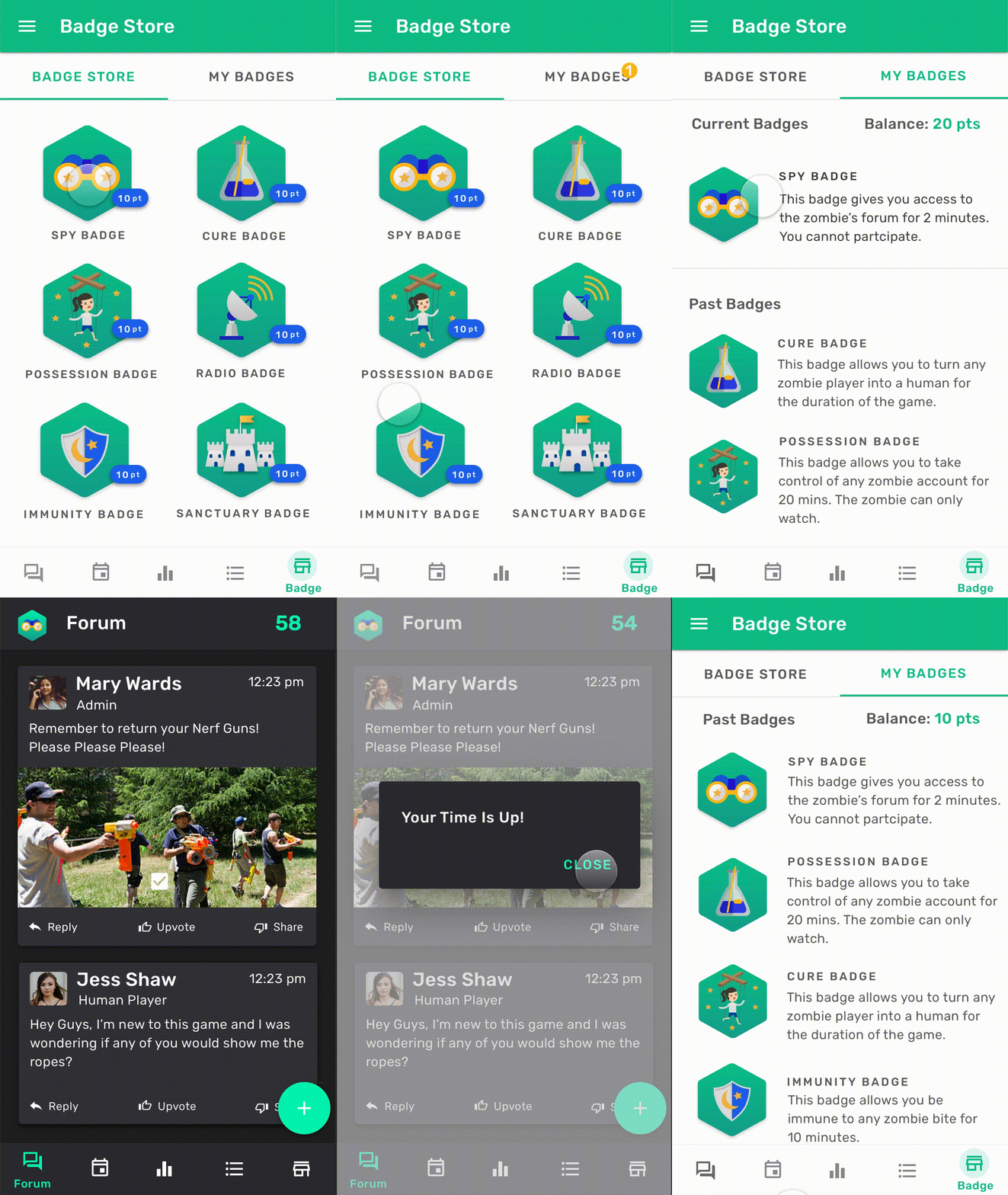
Badges are power-ups that can be purchased at the badge store. Inactive and active badges are stored within the “My Badges” tab.
Another way to acquire badges is through admins assigning bonus badges to incentivize zombies to attend earlier missions.
Players activate badges to enable temporary powers or advantages, such as the ability to cure or infect a human through the cure/infect badge. This badge allows slow zombies the ability to infect a human without moving an inch..
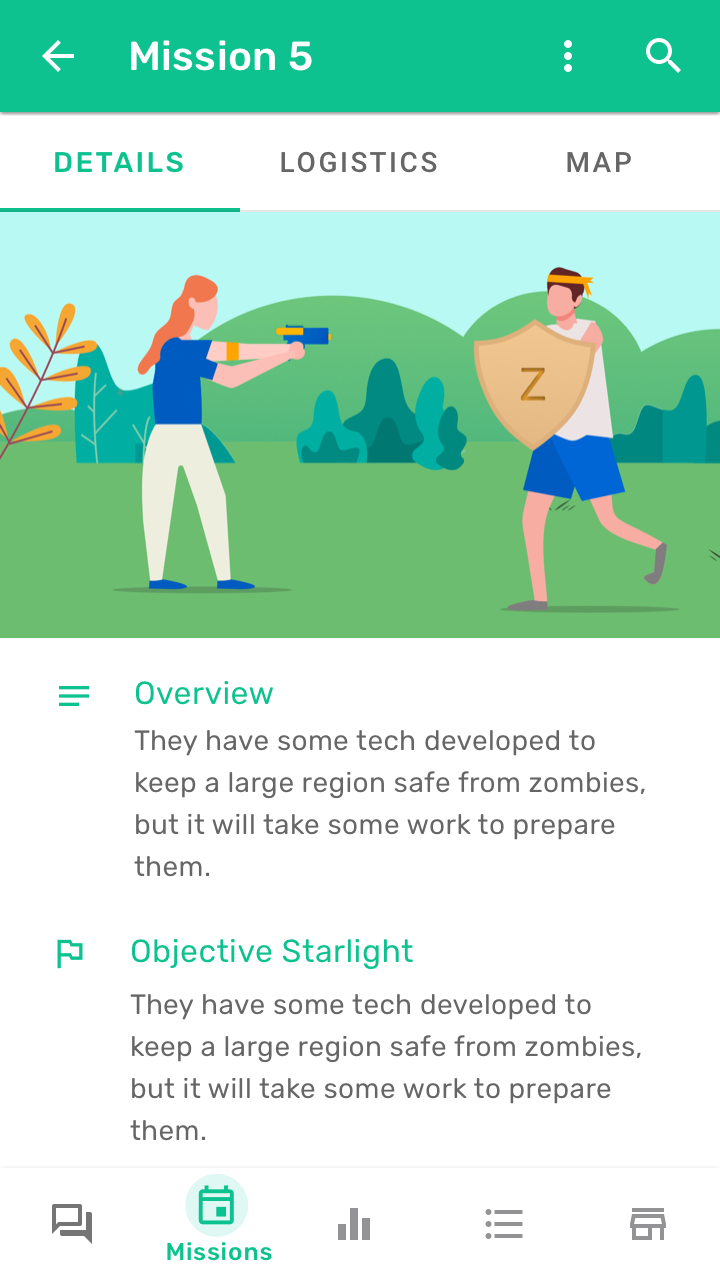
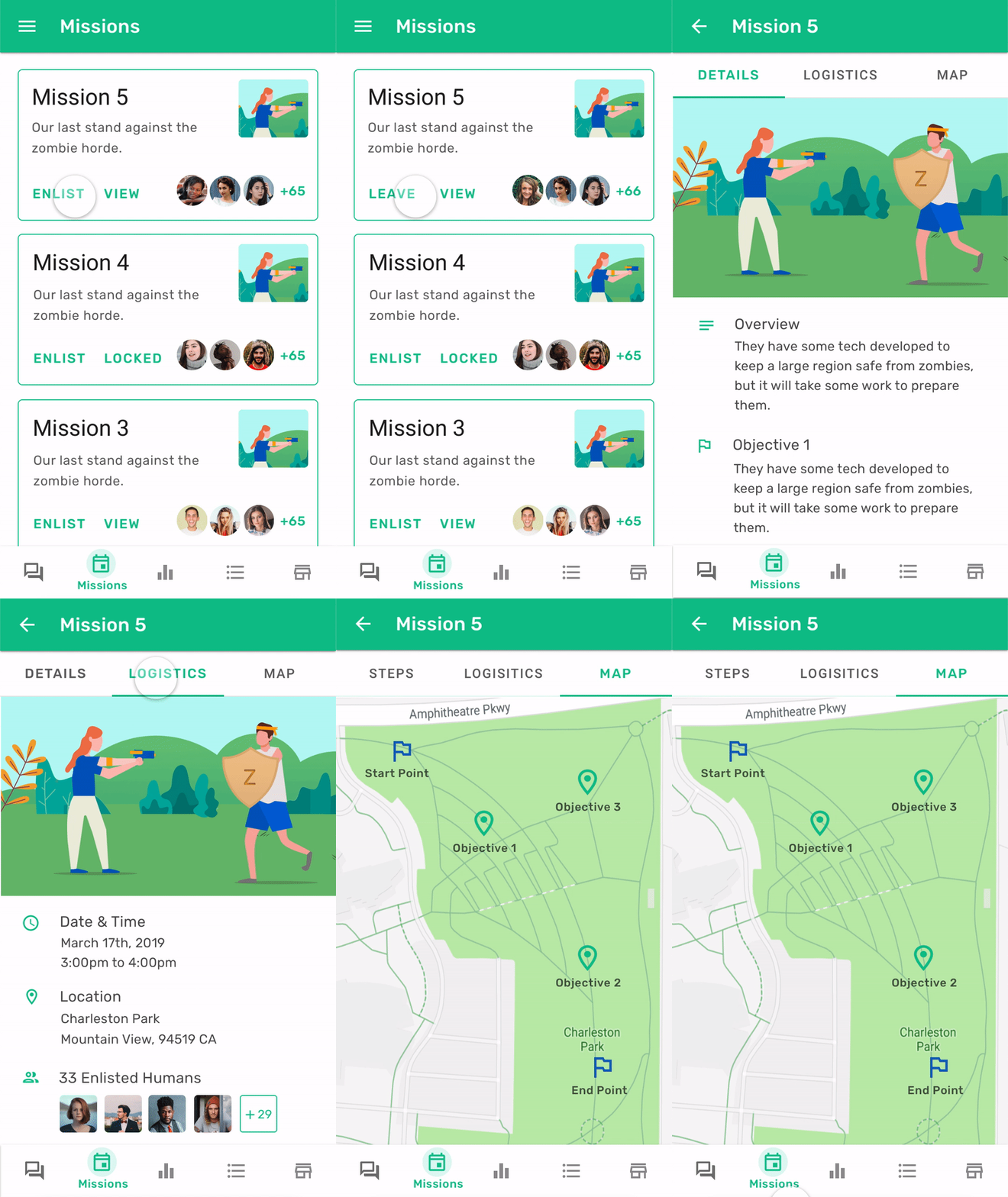
Human vs Zombies is a week-long event. Players attend hour long events called Missions. Humans complete these objectives while they are under zombie attack.
The mission interface consists of three main components: Details, Logistics, and Map.
Details contains "Overview" which can be a summary of the objectives or a fun background story., Objectives are tasks that players complete to earn points.
Logistics component is very similar to event pages, it contains date, time, address, and guest list.
Map contains a detailed view of game location, start and end points, and safe zones.
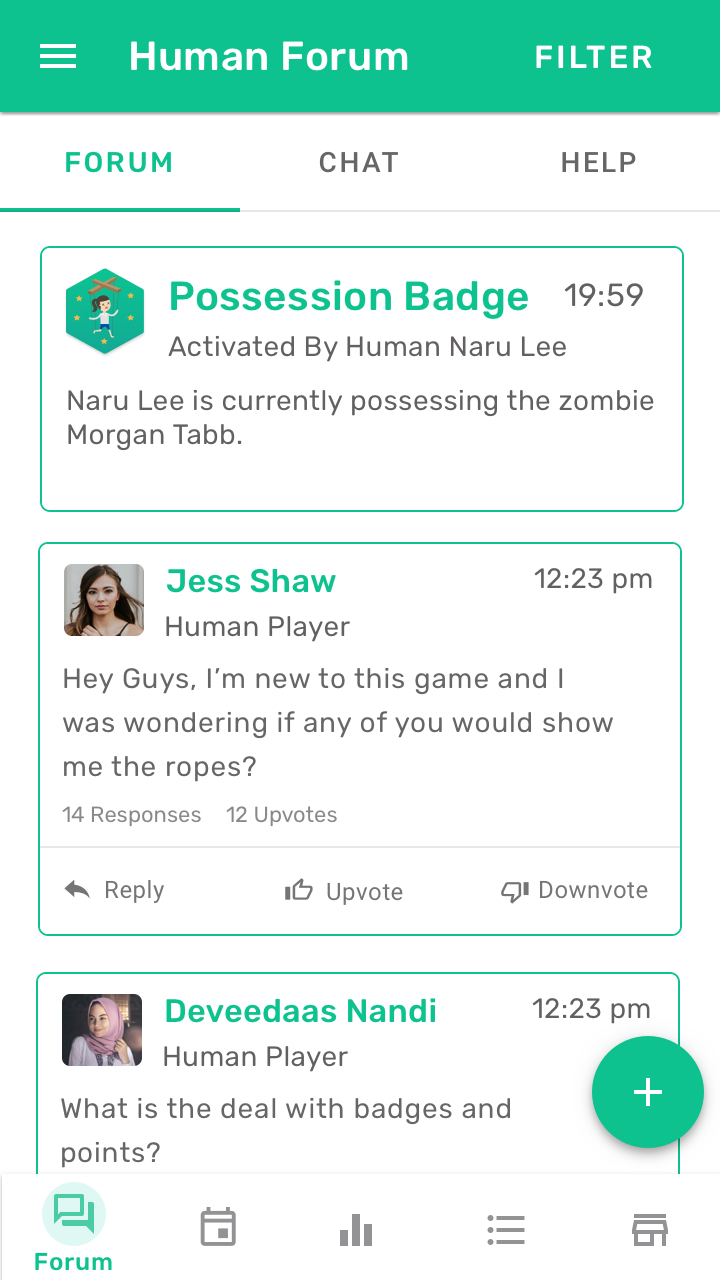
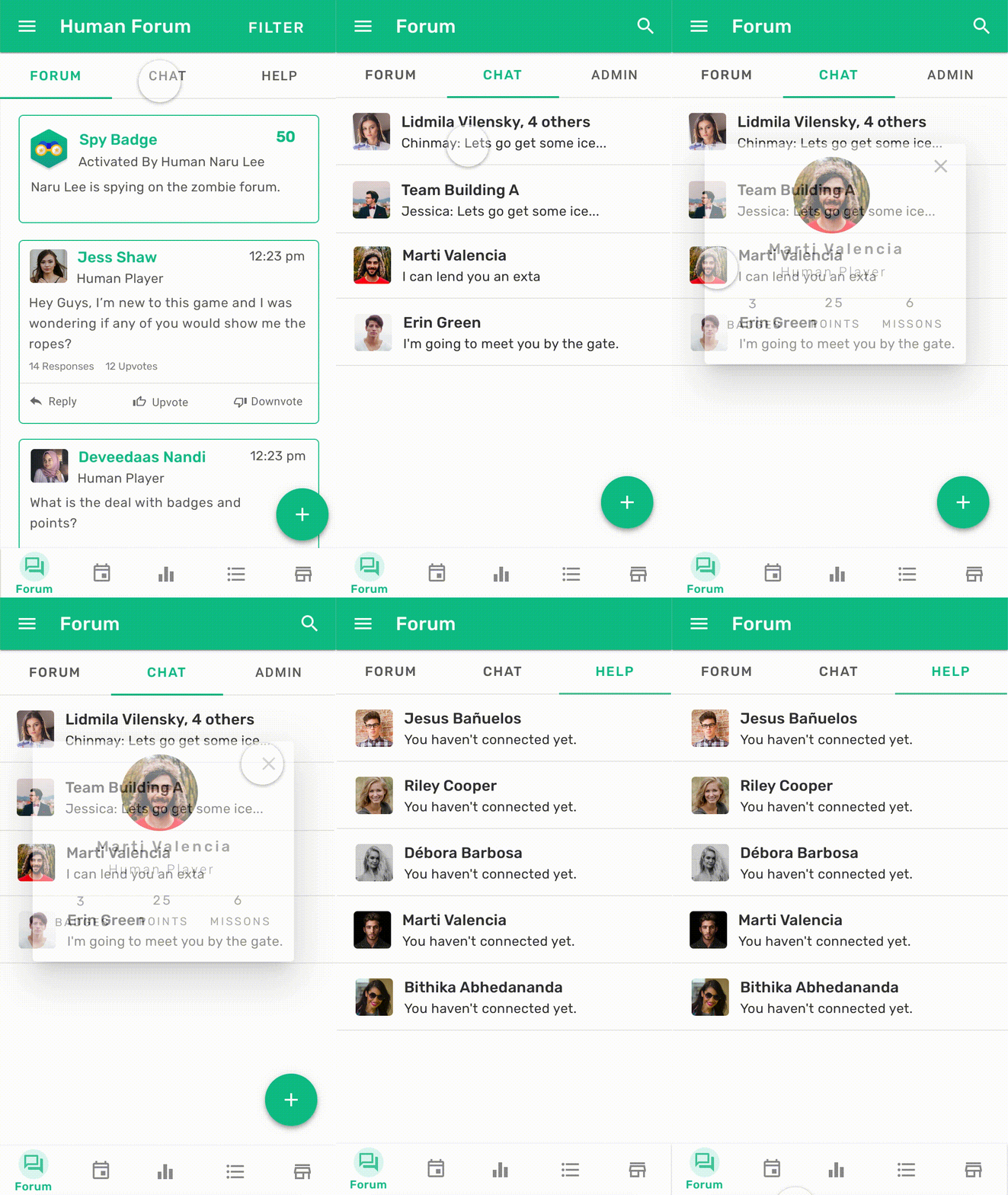
The forum replaces the global chat as the main way for users to communicate with one another.
The forum allows users to discuss game related topics with the entire team. Posts can be filtered and players can upvote and downvote posts which ensures content quality.
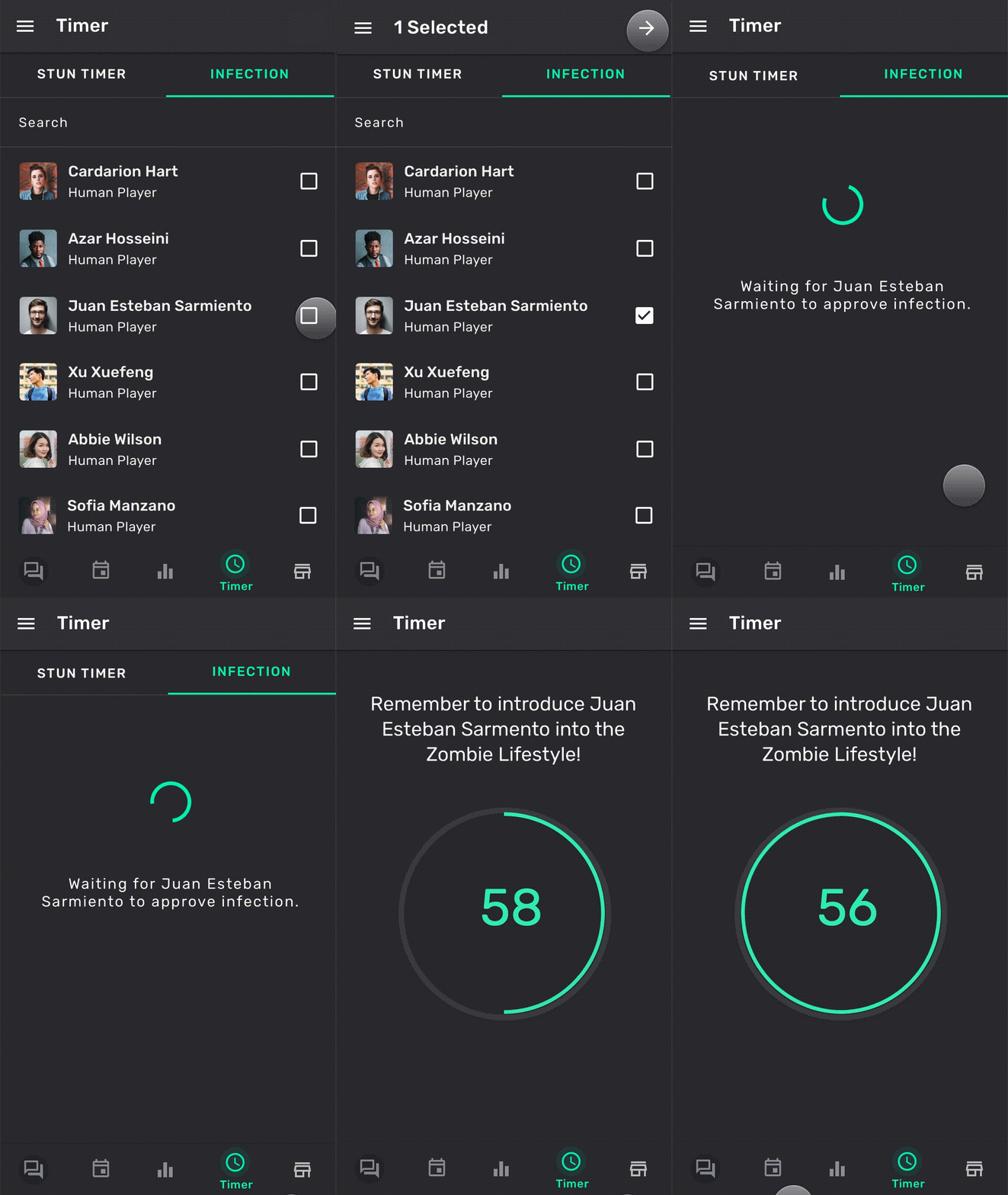
When a human gets tagged by a zombie they turn into a zombie. When this happens, both players go out of play to complete the infection process.
During this infection process, the human gives their name to their parent zombie.
After the zombie marks the human, the human will receive an infection notification.When the human accepts the infection, the interface transforms from light too dark. This color change represents the player’s transformation.
.gif)
I went to Google HQ to test the hi-fidelity prototype with the players. Many of the users approved of the mission feature, the badge store, and the visual aspect of the UI.However, there were a few pain points with the forum and the leaderboard.
Forum: 5/5 Users felt overwhelmed by the forum because they couldn't see how to filter through the posts. They were concerned about unimportant posts clogging their feed, much like global messages did in the previous website.
I had envisioned the app would prioritize important posts, like announcements from admins over others. I also thought the upvote/downvote buttons would let the "cream" rise to the top.
Solution: I added a filter button to the top nav bar and a welcome message that would explain the benefits of the forum and emphasize the upvote/downvote button.
Leaderboard: 4/5 Users were unsure if the losers and winners associated with the the top bar related to specific missions or the overall game.
Solution: I removed the top bar as it wasn't necessary to announce the winner of a particular mission, given that admins typically used the forum to make such announcements.
This project was a massive undertaking for one designer. Despite the challenge, it felt incredible leading the design from start to finish.
During this process, I learned that human vs zombies and games like it have a unique power to form community in way that is tight knit and collaborative. I heard over and over again that human vs zombies allowed users to connect with co worker that they would have never crossed paths with. I hope that in the near future, companies will use a game like this to build a stronger and more empathic work culture.